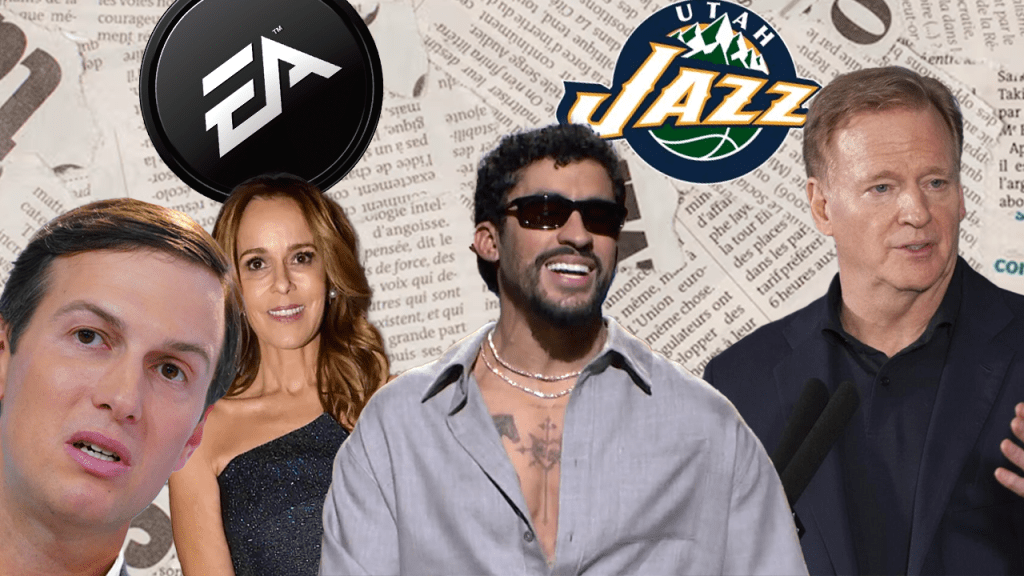
What is Late-Stage Capitalism?
Late-stage capitalism is a term used to describe an advanced phase of capitalism characterized by systemic inequality, corporate concentration, and deep structural issues. In other words, it highlights the absurdities and inequalities baked into the modern global economy.
Many people dismiss the concept, claiming inequality has always existed or calling “late-stage capitalism” nothing more than a meme or a cope. I wish that were the case, but today we’re seeing historic wealth gaps, a record number of people living paycheck to paycheck, and billion-dollar corporations laying off workers because of a mere $4 minimum wage increase. Meanwhile, media outlets urge sympathy for those same corporations while ordinary people skip meals just to make ends meet.
This ultramodern form of capitalism can be seen through the continued expansion of the global economy, the growing divide between the rich and poor, the consolidation of wealth by corporations and the ultra-wealthy, and the relentless attempt to commodify every aspect of life in pursuit of profit.
We’ve seen these trends intensify for years. In 2022, U.S. profit margins reached their widest point since 1950. That same year, 166 million Americans, roughly 64% of consumers, were living paycheck to paycheck, an increase of 9.3 million from the year before. More recent reports from Debt.com (69%) and PNC Bank (67%) suggest that number has only continued to rise. Whether it’s 67% or 69%, the trend is clear. More Americans are struggling financially than ever before.
We see similar signs in digital spaces. Take TikTok, for instance, in September 2023 the social media giant added a shopping feature to its already ad-saturated platform. Nearly every time I open the app, an ad greets me before I even scroll, followed by endless pop-ups designed to maximize profit.
Or take something like Klarna now letting people finance their Uber Eats orders, essentially allowing you to go into debt just to eat. It’s a perfect snapshot of how dystopian things have become, where even basic needs are turned into financial products. As of mid-2025, American household debt has reached a record high of over $18.3 trillion, fueled by rising mortgages, credit card balances, and auto loans. While this total marks a nominal record, it’s only slightly below the inflation-adjusted peak from 2008 — showing just how deeply personal debt has become ingrained in the modern economy.
I could go on with countless examples of growing inequality, poverty, and wealth disparity. But even just in the past week, some of the biggest stories in entertainment show how late-stage capitalism continues to sink its teeth into every corner of modern industry.
Late-stage Capitalism on the Largest Stage

The biggest story? Bad Bunny being chosen to headline the Super Bowl Halftime Show. Bad Bunny needs no introduction, he’s a multi-time Grammy-winning artist, a talented actor, a former WWE champion, and most recently starred in Caught Stealing alongside Austin Butler, Zoe Kravitz, and Regina King. He’s also a proud Puerto Rican and a vocal critic of U.S. President Donald Trump. Judged purely on talent, it’s clear he deserves the spotlight at the most-watched annual concert, yet, predictably, some people had a problem with this.
Online outrage hasn’t quieted in a week. Many see the NFL’s choice as a “woke” appeal or a slight to certain fans. In reality, it’s a move to broaden the league’s global reach, a textbook example of late-stage capitalism in action.
The NFL has long pursued international expansion. They’ve even suggested adding a four-team European Division. With games already played in Brazil, Ireland, Berlin, and especially London, which hosts three this season alone, the league’s global ambitions are obvious.
Given all this, it’s no surprise that the NFL and Roc Nation, who have overseen halftime show decisions since 2019, chose a talented, globally resonant Puerto Rican superstar. This move is part of a calculated effort to expand the league’s audience worldwide. Such global ambitions reflect a hallmark of late-stage capitalism, private entities acting increasingly like multinational corporations. The NFL may not officially be one yet, but its trajectory is unmistakable.
Late-stage Capitalism’s Effect on Gaming and Legacy Media

Late-stage capitalism hasn’t just infiltrated sports, it’s also making waves in the gaming world. Last week, Electronic Arts, best known for Madden NFL and EA Sports FC, made headlines when private equity fund Silver Lake, investment firm Affinity Partners, and Saudi Arabia’s Public Investment Fund purchased the company for a record $55 billion. While Saudi Arabia’s influence in gaming is notable, more on that in a moment, Affinity Partners’ role deserves special attention.
Affinity Partners, founded in 2021 by Jared Kushner, received over $3 billion in commitments within six months of its creation. The firm aimed to expand American and Israeli companies into global markets, particularly in the Middle East, India, and Asia. Its largest investor? Saudi Arabia’s sovereign wealth fund, the Public Investment Fund, which contributed $2 billion. Despite objections from top officials, Crown Prince Mohammed bin Salman overruled them to complete the investment. Today, the firm has around 20 staff members, has collected millions in fees, but as of 2024, reportedly has returned no profits to its investors.
Even more astonishing, despite the $55 billion buyout, EA is reportedly $20 billion in debt. That’s a staggering figure. With Saudi Arabia investing heavily in its “Vision 2030” plan to diversify beyond oil, it will be interesting — and likely concerning — to see how Kushner and the Saudis steer the company and what corners they might cut.
EA was already infamous for shady practices. The company has monetized nearly every aspect of gaming, charging real-world money for in-game perks. A prime example is Star Wars Battlefront II. After fans complained about micro-transactions, EA removed the option to spend real cash. But doing so broke the game’s progression system, leaving players frustrated after hours of effort to unlock iconic characters and upgrades. What could have been an immersive experience became a grind designed to funnel cash.
Now, under new ownership and facing a $20 billion debt mountain, expect EA to continue these practices — just on hyperdrive. Late-stage capitalism at its finest, turning gaming into a high-stakes, profit-first machine with little regard for the players footing the bill.
And late-stage capitalism’s reach stretches even further than that. doesn’t stop there. The same forces shaping gaming are tightening their grip on media and entertainment. Oracle founder Larry Ellison, a longtime Trump ally, has reportedly been involved in efforts to acquire a stake in TikTok should U.S. lawmakers force a sale. His son, David Ellison, recently made headlines when his company Skydance Media finalized its deal to take control of Paramount Global, the parent company of CBS and other legacy outlets.
In both cases, immense private wealth is being used to secure control over the platforms that shape what the vast majority of people see and hear. Their political connections and financial interests also suggest an alignment with certain ideological or foreign policy priorities, another reminder of how concentrated wealth often shapes not only markets but narratives.
This trend extends further with recent developments in legacy media. David Ellison’s Paramount has acquired Bari Weiss’s The Free Press for about $150 million, and Weiss has been named the newly created Editor-in-Chief of CBS News, reporting directly to Ellison.
Weiss will continue leading The Free Press as a branded independent outlet under Paramount, but her takeover reflects how media power is concentrating under corporate structures that blend content, platforms, and, often implicitly, political ideology. Whether this translates to direct editorial bias or narrative control remains to be seen, but you have to be a fool to not seen the writing on the wall.
Weiss has done whatever she needs to do to capitulate to the “powers that be.” Her entire political project has failed to create any meaningful progress. She has even aligned herself with homophobic capitalists who would gladly see a lesbian like her lose her rights.
In a 2023 speech to the Federalist Society, a conservative and libertarian propaganda outlet, Weiss said, “I know that there are some people in this room who don’t believe that my marriage should have been legal. And that’s OK. Because we’re all Americans who want lower taxes.” That quote speaks volumes. It reveals that Weiss’s only consistent interest is in appeasing whoever can advance her wealth and influence, regardless of the ideological cost.
With Weiss holding strong Zionist positions and now working under the extremely pro-Israel Ellison family, CBS’s already limited coverage of the Israel-Palestine conflict since October 7, 2023, seems poised to become yet another outlet for pro-Israel propaganda.
Whether the goal is profit, power, or influence, the outcome remains the same: a shrinking number of ultra-wealthy individuals determining the flow of information and culture. That’s late-stage capitalism in motion, consolidation not just of capital, but of consciousness.
Design, Minimalism, and the Homogenization of Culture
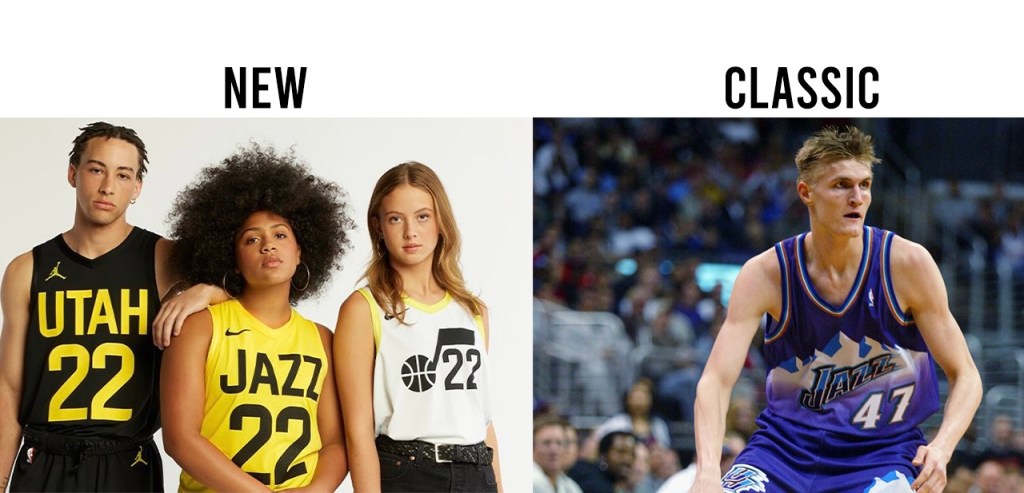
This goes far beyond the NFL or video games. Recently on social media, people have lamented the artistic character that seems to have vanished from logos, uniforms, buildings, and even movie theaters. From sports team branding to corporate logos and interiors, minimalism driven by cost-cutting and corporate consolidation is erasing personality from the spaces and products we interact with.
Take the NBA, my favorite sports league. Social media often celebrates late 90s and early 2000s basketball, and it’s easy to see why. While today’s NBA delivers a higher-quality on-court product, the league’s visual identity has lost much of its former vibrancy. Unique, iconic logos have been replaced by minimalist, corporatized designs, the Utah Jazz are a prime example. Why? First, generic logos and uniforms reduce costs, fitting the big-business model the league has embraced under Commissioner Adam Silver. Second, fans will continue to buy tickets, merchandise, and NBA League Pass subscriptions regardless. By leveraging nostalgia, selling retro merchandise from the past, the NBA maximizes profit while keeping costs lower than they would be otherwise. With team revenue hitting a record $11.3 billion in 2023–24, don’t expect the old logos to return outside “Classic Edition” releases. What they’re doing works.
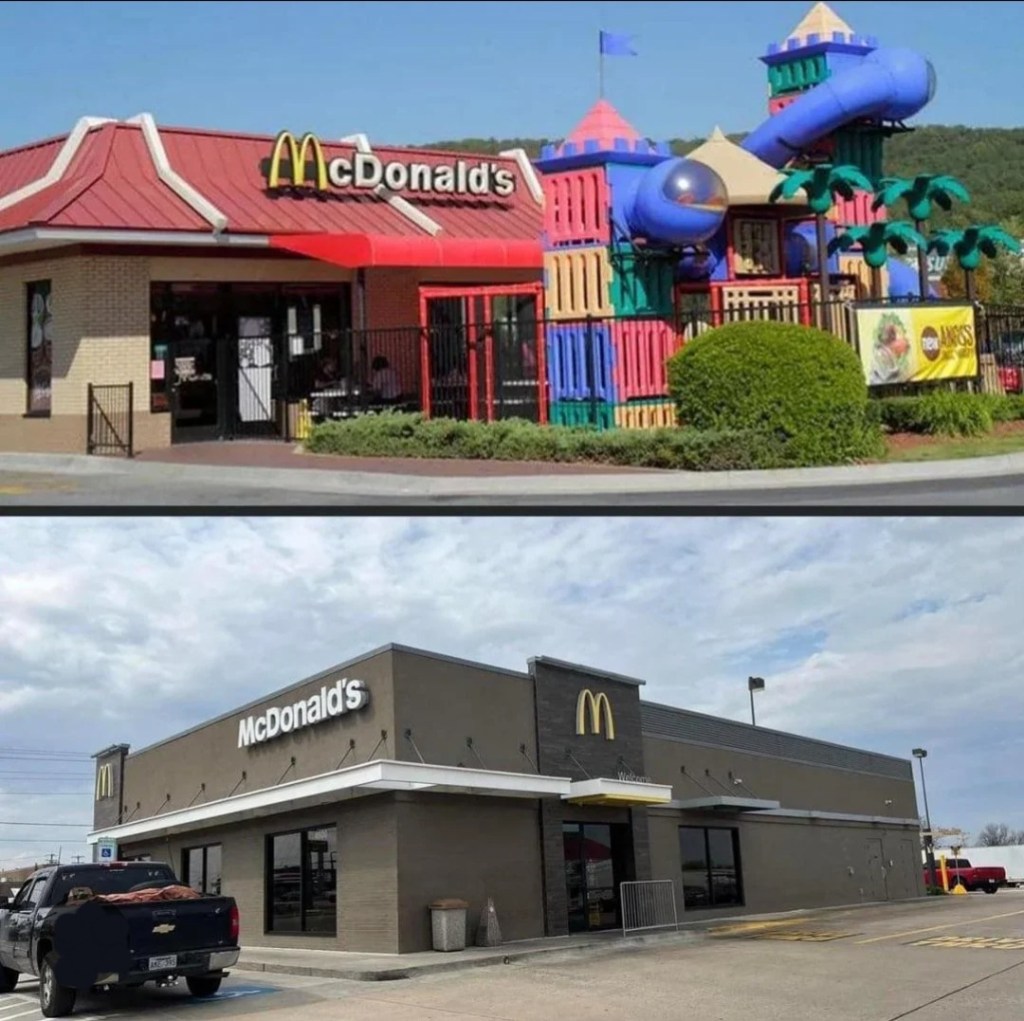
This same logic applies to fast food and movie theaters. McDonald’s, for instance, has moved away from vibrant, playful designs in favor of minimalist, generic buildings. Selling a blank, standardized property is far easier than a customized, branded one. Anyone over 25 can recall spotting former McDonald’s, Pizza Hut, or KFC locations simply by the roof or building shape — a level of character now largely gone. Soaring property prices and investor consolidation incentivize bland, uniform designs.

Movie theaters face similar pressures. Concessions, not ticket sales, drive profit, and much of ticket revenue goes to distributors. Membership programs, like AMC’s “Stubs A-List,” which allows members to watch four movies a week, aim to keep audiences coming, but overall margins are slim. Investing in flashy lobbies or futuristic aesthetics offers little return when most patrons spend only a few minutes noticing them. Rising costs for housing, utilities, food, and tuition mean people can’t afford frequent theater visits, so the pressure to cut costs, and embrace minimalism, is even greater. The result? Closures, consolidations, and homogenized experiences, a textbook case of late-stage capitalism at work.
Sports League Expansions
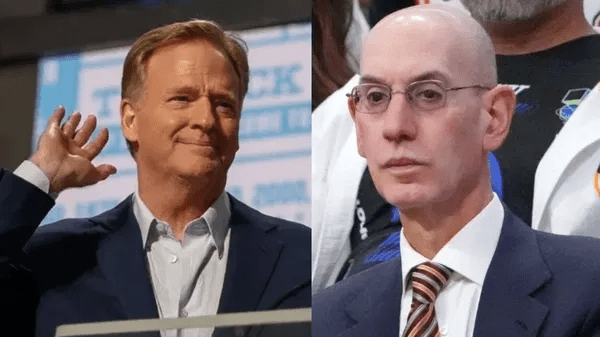
From 1978 to 2020, the NFL played a 16-game season. That changed in 2021, when the league adopted an 18-week, 17-game schedule. Four years later, Commissioner Roger Goodell is already talking about adding an 18th game. Unsurprisingly, the NFL Players Association isn’t happy. NFLPA executive director Lloyd Howell Jr. stated plainly, “No one wants to play an 18th game.”
The NFL is far from alone in this push to add more games. During the pandemic, the NBA held its first Play-In Tournament in the Orlando “bubble” to determine the final playoff spots. After its success, it became a permanent fixture, effectively expanding the playoffs from 16 to 20 teams. The Play-In Tournament allows teams with .500 or worse records to sneak into the postseason, a clear example of the league prioritizing revenue over merit.
Now, with expanded TV deals including streaming platforms like Amazon Prime Video and Peacock, fans face record prices just to watch their favorite teams and players. Adding games, pre-season matchups, and tournaments is simply a profit-maximizing strategy, plain and simple.
On a more personal note, the Brooklyn Nets highlight how investments and elite wealth shape modern sports. I grew up watching a ton of both the Los Angeles Lakers and the New Jersey Nets, the former being my mother’s favorite team since the days of Magic Johnson and Kareem Abdul-Jabbar. The Nets were the local team as a child growing up in New Jersey, thus making it easy for me to root for them. Even after seasons full of historic amounts of losses, and the relocation to Brooklyn, the Nets provided countless memories with family, friends, and fellow fans. Yet the current direction under Joe Tsai and minority stakeholder Julia Koch disgusts me to the point that I don’t know how much longer I’ll be rooting for the team.
Tsai’s portfolio spans multiple sports franchises. Tsai has full ownership of the Brooklyn Nets and New York Liberty, plus minority stakes in multiple teams, including the Miami Dolphins and two National Lacrosse League teams, a setup that raises serious conflict-of-interest concerns. Meanwhile, Koch and her children acquired a 15% stake in BSE Global, parent company of the Nets, Liberty, and Barclays Center, for a reported $1 billion in 2024. The Koch family’s ties to Trump and investments in Israeli startups, like Insightec, reveal how political and financial power intersect with sports ownership. Late-stage capitalism has clearly infiltrated professional sports, shaping schedules, ownership, and even the teams and games we consume. Corruption and profit-driven investments now touch everything fans hold dear.
The more aware you are of what late-stage capitalism entails, the clearer its effects become on the hobbies and passions you care about. With multiple major news stories this week alone tied to corporate consolidation, don’t be surprised if this trend continues through the 2026 midterm elections, and even beyond. In 2025 alone, the Federal Trade Commission approved $63 billion in corporate mergers in just one month, a stark contrast to previous administrations, which conducted far stricter reviews
While massive mergers have occurred under nearly every recent administration, the pace today is unprecedented. Microsoft’s multi-year fight to acquire Activision for around $69 billion contrasts sharply with the recent acquisition of Electronic Arts by Affinity Partners and others, which appears to be proceeding with ease. Despite the long regulatory battle, Microsoft’s acquisition was quickly followed by significant layoffs and price hikes, moves that have hurt both developers and gamers alike. This signals historic levels of wealth consolidation, private equity investment, and the relentless spread of late-stage capitalism into virtually everything Americans, and now even non-Americans, know and love.
We’re seeing these same late-stage capitalist dynamics play out across industries, from entertainment and technology to the very essentials people rely on every day.
Buckle up, things look like they’ll get worse before they get better.
 SLOT
SLOT 